 |
 |
Article by |
The PSYCHO Sequels
By James Futch

| PSYCHO SEQUELS, PREQUELS, & REMAKES MOVIE REVIEW |
Hitchcock's Disciple
Richard Franklin first saw PSYCHO when he was 12-years-old.
Born in Melbourne, Australia, Franklin began making films with an 8mm movie camera when he was 10-years-old.
Franklin grew to be an avid Hitchcock fan, and a noted expert on the suspense genre. While in film school at USC, Franklin actually got to meet Alfred Hitchcock.
The famous director called the 19-year-old Franklin on the phone in response to a letter sent to Hitchcock's office asking permission to screen ROPE during a three-week Hitchcock film festival, arranged by Franklin himself.
The film student was flabbergasted to hear the Master's voice on the other end of the line.
"Good morning, Franklin," said the English Hitchcock.
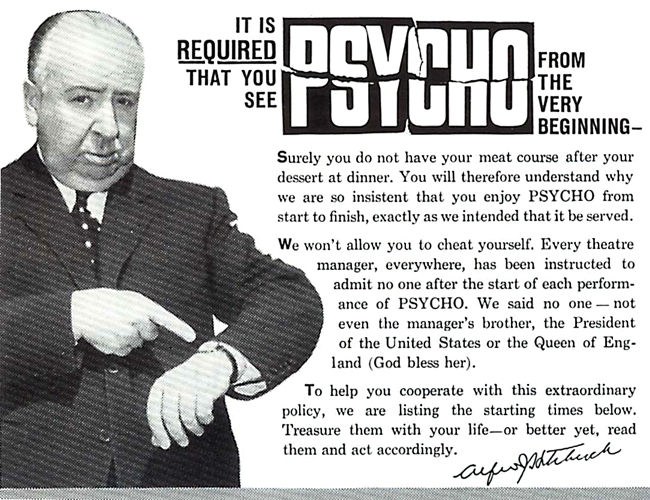
Hitchcock loved to toy with his hype.
The conversation resulted in Alfred Hitchcock going to the school and sharing the stage with Richard Franklin as they viewed and critiqued the films with the students. Later, when Alfred Hitchcock shot TOPAZ (1969), he invited Franklin to the set to observe the making of the movie.
PATRICK (1978) was Franklin's first major film and the thriller won the young director many awards, including Grand Prize and Best Director at the 1978 International Festival of Fantasy and Horror in Sitges, Spain, Grand Prize at the Avoriaz Festival of Science Fiction and Horror Films in Avoriaz, France in 1979 and voted best foreign film at the Academy of Science Fiction, Fantasy and Horror Films in the United States in 1980.
 The next of Franklin's films of note to horror buffs was ROAD GAMES,
made in 1981. Another thriller, the film was set in the Australian
desert and starred Jamie Lee Curtis, then already rising star of
HALLOWEEN. The film co-starred Stacey Keach, who was still years
from Mike Hammer, and light years away from the hilarious male pattern
baldness sufferer in John Carpenter's BODY BAGS (1993).
The next of Franklin's films of note to horror buffs was ROAD GAMES,
made in 1981. Another thriller, the film was set in the Australian
desert and starred Jamie Lee Curtis, then already rising star of
HALLOWEEN. The film co-starred Stacey Keach, who was still years
from Mike Hammer, and light years away from the hilarious male pattern
baldness sufferer in John Carpenter's BODY BAGS (1993).
When Bernard Schwartz, executive producer of PSYCHO II, and Hilton Green, producer (and first assistant director on the original PSYCHO), made calls for directors for the proposed film, Richard Franklin was their first choice, due to his vast expertise of the Hitchcock canon, as well as on the original film itself.
"PSYCHO [had] a mood and a feeling that no other movie has had," said Franklin, "it is part horror film, part gothic melodrama and part black comedy all mixed together. PSYCHO II continues in the same genre. It is a psychological thriller that works on one level as a fairly complex puzzle to be unraveled, while keeping us emotionally involved on another level."
"Richard has a strong background in the thriller field," said executive producer Bernhard Schwartz, "I was sure he was the right man to do it. [He] probably knows more about [Hitchcock's] films than anyone around."
Franklin enthusiastically took the job, knowing he could bring his knowledge of the suspense genre to the making of the sequel.
"Getting the audience emotionally involved was really Hitchcock's major concern, and the major concern of John Ford, probably my two favorite filmmakers. I've used the camera, the soundtrack, the score, and the performances to try to involve the audience emotionally on a psychological roller coaster ride."
All of which combined makes PSYCHO II a remarkable technical triumph.

PSYCHO, PSYCHO II, and PSYCHO III photos copyright 1983 and 1985 Universal Studios, Inc. All rights reserved. May be reprinted for newspapers and other periodicals.
This article copyright 2002 E.C.McMullen Jr.

|
| DRESS NICE | |

| YOU MIGHT ALSO ENJOY (Sub-Section: PSYCHO and Mother's Children) |
||
 |
 |
 |
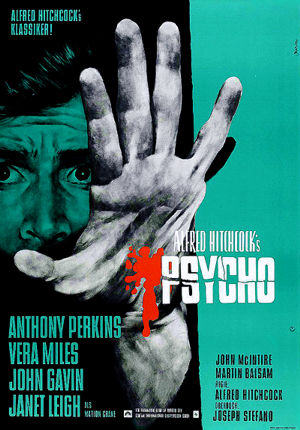
| PSYCHO MOVIE REVIEW |
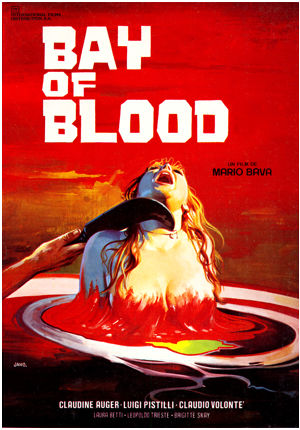
A BAY OF BLOOD MOVIE REVIEW |
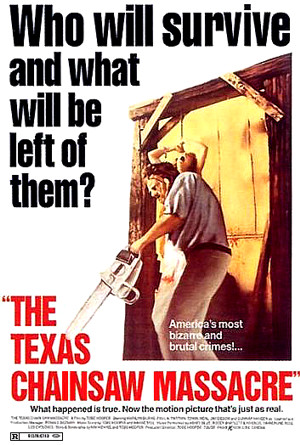
THE TEXAS CHAINSAW MASSACRE MOVIE REVIEW |