 |
 |
Review by E.C.McMullen Jr. |
|
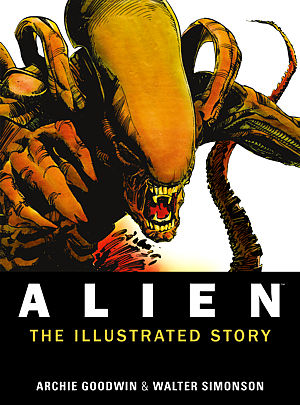
ALIEN: THE ILLUSTRATED STORY- 1979 - 2012Writer: Archie Goodwin Artist: Walter Simonson First Pub; June 26, 1979 Heavy Metal Communications, Inc. Reissue: Sept. 7, 2012 Titan Books $14.94 US ISBN: 978-1-781161-29-6 |
|||

Over 40 years later and "You still don't understand what you're dealing with, do you?"
The perfect Alien Monster movie.
We're well into 2022 and Disney is about to make an ALIEN TV Show.
It's going to suck, but so did half the sequels, two prequels, and one spin-off and none of that ever stopped 20th Century Fox and the stewards of ALIEN from pushing through a dizzyingly incompetent display of foul dumpster milk through the decades.
Out of everyone involved in making the movies, only James Cameron can still feel pride in knowing he never made a bad ALIEN movie, and, in fact, made one of the only two great ones out of 8 movies and 40 years altogether.
Still that first ALIEN: Writers Dan O'Bannon and Ronald Shusett's magnum opus, as directed by a middle-aged Ridley Scott. ALIEN is, arguably of course, Scott's magnum opus as well.
The editor and publishers (National Lampoon) of a popular illustrated magazine of the time, HEAVY METAL, were eager to the point of desperation to secure the graphic novel rights of the movie.
The Heavy Metal publishers hired writer Archie Goodwin, a writer and editor from their competition, the CREEPY and EERIE illustrated magazines. Archie suggested Penciller and Inker Walter Simonson, and Walt brought onboard his wife Louise as one of the colorists.
Boom! We're off to the races! Now all Goodwin and Simonson had to do was see the early cut.
Ah yes, that early cut.
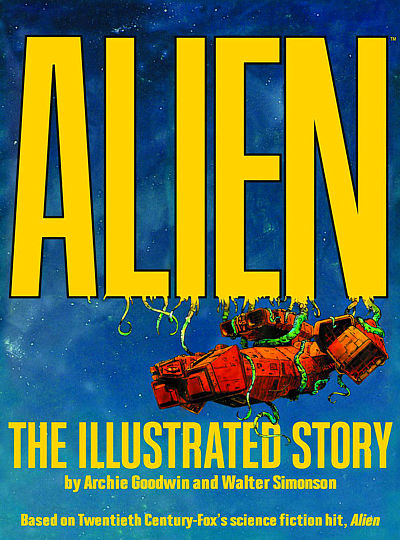
ALIEN: THE ILLUSTRATED STORY - 1979 Heavy Metal Cover
ALIEN fans who have the DVDs or Blu-Rays with the extra cuts, know just how heavily edited the theatrical version of ALIEN was. What many don't know is that ALIEN was edited nearly to the wire. And by wire I mean a mere week before wide release.
The original cut of ALIEN ran over three hours.
Goodwin pared that down a bit, keeping the essentials, without knowing that, after his viewing, Director Scott was forced to further edit his bloody gorefest to avoid an X-rating.
The upshot of that is, ALIEN: THE ILLUSTRATED STORY isn't quite the same story as the movie that hit theaters and fans have memorized this entire time. It's a creature unto itself, familiar and yet... you know.
TRIVIAFor more sources on ALIEN: THE ILLUSTRATED STORY, check out, Wikipedia/Alien: The Illustrated Story and Xenopedia/Alien: The Illustrated Story Try it before you buy it. Alien: The Illustrated Story. Free in archives. The free to read Original screenplay of ALIEN at DailyScript! |
That said, this graphic novel became a smash hit in its time, being the first graphic novel or comic book to break into the New York Times Best-seller list and it stayed there for eight weeks. Keep in mind that this was 1979, years before the NYT had a section for graphic novels and ALIEN: THE ILLUSTRATED STORY is what compelled the publication to do so.
Walter Simonson's use of standard comic book panels are quickly destroyed on subsequent pages as he chose to let the action break out of conventional standards. Connective tissue discussion between characters get tiny, almost postage stamp sized boxes, while the frightening set pieces may splash across two full pages.
This works amazingly well as Walt accurately adapted Archie's writing, knowing precisely when to be subtle and when to be flamboyant in a way that cunningly duplicates the audience's reaction. That is, if 40+ years of reading and listening to fan reaction to the movie is any indicator.
Of course, ALIEN being one of the best Science Fiction Horror movies ever made, where does this graphic novel place in the...
!!!SCIENCE MOMENT!!!:
The beacon signal that "Mother" picked up comes from a single planetoid. Lambert describes it as 1200 meters in diameter to which Captain Dallas replies "Tiny".
Hoo boy, is it ever!
Continued at Alien The Illustrated Story SCIMO
Like the movie its based on, ALIEN: THE ILLUSTRATED STORY has matured without ageing into obsolescence. As our technology has, in some ways advanced in a different direction, it only serves to make ALIEN appear as an alternate time line story, not an outdated one.
Five Fanboys all the way!

This review copyright 2022 E.C.McMullen Jr.
| GET SOME CLOTHES ON | |
| YOU MIGHT ALSO ENJOY (Sub-Section: AN ALIEN HISTORY) |
||
 |
 |
 |
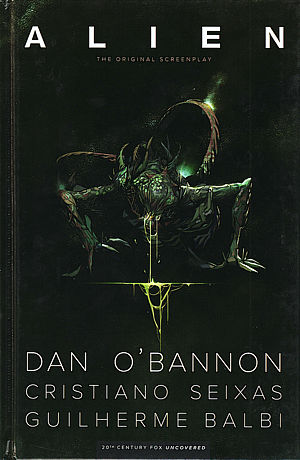
| ALIEN: THE ORIGINAL SCREENPLAY GRAPHIC NOVEL REVIEW |
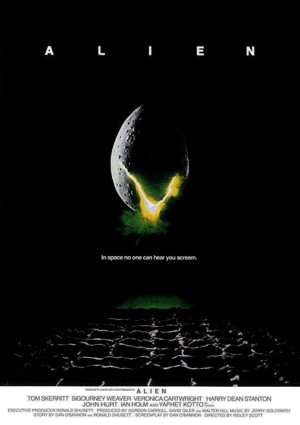
ALIEN MOVIE REVIEW |
ALIEN FX ON HULU TV SERIES NEWS |
For those who scroll ...
Graphic novels and the New York Times Bestseller list
Many major online and print publications get it wrong (No, Alan Moore's WATCHMEN was not the first NYT best selling graphic novel), but as a hardcore comics fan since the 1970s, here is the NYT's best selling Graphic comic Books, Top Ten, by year.
But wait!
Why should you bother with such old news from the 20th Century?
Because as you'll notice, the first and oldest Top Ten, in order, are among the strongest Graphic Novel/Books (not all Graphic comic books are fiction, they're not even necessarily "Comic"), Movie, and Television Intellectual Properties (IPs) of the 21st Century.
By the time the culturally crippled New York Times turned it's myopic stare at sales at Comic Book stores (because by 2009 the biggest of the traditional brick and mortar bookstore chains were burying themselves into the eternal grave of history and NYT itself, was desperate to keep the relevance of its biggest remaining crown jewel), they'd missed so much. So world renown titles as V: FOR VENDETTA, MAUS, THE MASK, THE CROW, SIN CITY, JIMMY CORRIGAN: THE SMARTEST KID ON EARTH, PERSEPOLIS, FUN HOME, so many others just in the Western world alone. It's staggering to think of how much NYT intentionally smothered to create a faux reality that, in truth, never existed.
So note that I'm going by year and not individual Graphic Novel/Book. Which means there will be huge gaps of years where the New York Times counted no Graphic Novel/Books, and some years will have ties in the number of Graphic Novel/Books that made the NYT's First 10 years.
1. ALIEN: THE ILLUSTRATED STORY by Archie Goodwin and Walter Simonson (1979)
- TIE -
2. WATCHMEN by Alan Moore and Dave Gibbons, 1987
2. THE DARK KNIGHT RETURNS by Frank Miller, 1987
3. MAUS II: A SURVIVOR'S TALE by Art Speigleman, 1991
In 2009, the New York Times began counting Comic Book store sales and everything went topsy turvey.
- TIE -
4. STARMAN OMNIBUS
Vol. 2 by James Robinson and Tony Harris, 2009
4.
THE WALKING DEAD Vol. 4: THE HEART'S DESIRE by Robert Kirkman and Tony Harris, 2009
4. A DRIFTING LIFE by Yoshihiro Tatsumi, 2009
4. X-MEN: MISFITS by Raina Telgemeier and Dave Roman, 2009
4. THE WONDERFUL WORLD OF OZ by Eric Shanower and Skottie Young, 2009
- TIE -
5.
SMILE by Raina Telgemeier, 2010
5. SCOTT PILGRIM'S FINEST HOUR Vol. 6 by Bryan Lee O'Malley, 2010
5. KICK-ASS by Mark Millar and John Romita Jr., 2010
5. TWILIGHT: The Graphic Novel, Vol. 1 by Stephenie Meyer and Young Kim, 2010
- TIE -
6.
HABIBI by Craig Thompson, 2011
6.
TWILIGHT: The Graphic Novel, Vol. 2 by Stephenie Meyer and Young Kim, 2011
6.
THE WALKING DEAD, Vol. 14: No Way Out by Robert Kirkman, Charlie Adlard, and Cliff Rathburn, 2011
6.
FEYNMAN by Jim Ottaviani and Leland Myrick, 2011
- TIE -
7. BUILDING STORIES by Chris Ware, 2012
7. The Walking Dead, Vol. 16: A Larger World by Robert Kirkman, Charlie Adlard, and Cliff Rathburn, 2012
7. Are You My Mother? by Alison Bechdel, 2012
- TIE -
8. March: Book One by John Lewis, Andrew Aydin, and Nate Powell, 2013
8. The Walking Dead, Vol. 18: What Comes After by Robert Kirkman, Charlie Adlard, and Cliff Rathburn, 2013
8. Saga, Vol. 2 by Brian K. Vaughan and Fiona Staples, 2013
- TIE -
9. March: Book Two by John Lewis, Andrew Aydin, and Nate Powell, 2014
9. The Walking Dead, Vol. 20: All Out War – Part One by Robert Kirkman, Charlie Adlard, and Stefano Gaudiano, 2014
9. Saga, Vol. 3 by Brian K. Vaughan and Fiona Staples, 2014
9. Sisters by Raina Telgemeier, 2014
- TIE -
10. March: Book Three by John Lewis, Andrew Aydin, and Nate Powell, 2015
10. The Walking Dead, Vol. 23: Whispers into Screams by Robert Kirkman, Charlie Adlard, and Stefano Gaudiano, 2015
10. Saga, Vol. 5 by Brian K. Vaughan and Fiona Staples, 2015
10. Step Aside, Pops: A Hark! A Vagrant Collection by Kate Beaton, 2015
There you are. In a span of 30 years from the time the first Graphic Novel made its appearance on the New York Times Top Ten, and then only because it was a movie tie-in for a major Hollywood Production, goading and guilting a reluctant Grey has-been into admittance, only four titles made it through.
Excluding the gaps that the NYT created, it would take from 1979 to 2015 to mark ten full years of recognition of the form.
FEO AMANTE'S HORROR THRILLERCreated by:E.C.McMullen Jr. FOLLOW ME @ |
| Amazon |
| ECMJr |
| Feo Blog |
| IMDb |
| Stage32 |
| X |
| YouTube |
| Zazzle Shop |