 |
 |
JACK |
| JACK KETCHUM | FANBOY | MOVIES | CONVENTIONS | SCIENCE MOMENT | HORRIBLE NEWS |
|
Monica J. O'Rourke interviews
JK: Short stories are a piece of cake. They're a busman's holiday. They're fun things to do once you get the idea, once those things again come together. MO: A lot of writers can't do short stories well. JK: I just enjoy the hell out of them. I'll get a short story idea, once it coalesces, and I don't get them that often. They have to coalesce, but once they do, I'll spend three days just having a ball writing these short stories and then it's done. MO: And unlike your novels, your short stories don't tend to be about real events. JK: That's true. MO: Maybe your short stories are more experimental. JK: Possibly experimental. Because you're not married to a short story the way you're married to a novel. So you can mess around a little bit, and if it doesn't work you put it back in your drawer. Maybe take it out in ten years and try again. Which I've done. But it's fun to do because sometimes they just wonderfully fall into place. I love three shots: sometimes you get beginning, middle and end and it'll just coalesce so beautifully. “Returns” comes to mind. I happen to like “Returns” a lot. “Returns” was done in one day. A fucking day. And then I just revised it and tuned it up. And it was such a pleasure to write that, so much fun to know that you had all that stuff together, you had all those licks together, you had the emotional context in there that you wanted to have, and it just flew out of you. Like you wrote poetry when you were a little kid, it was that kind of thing. An almost adolescent sense of, I've got to get this out of me because it’s there, and it's flying, it's going. MO: One of you most anthologized and well known stories is “The Box.” How long did that take to write?
JK: That was a quick one too. I walk into a bar one day and my friend Neil (McPheeters) is scribbling on a cocktail napkin and I said “Hi, Neil,” and he said “Shut up, I've got this idea,” and he gave me basically the entire idea of “The Box.” His notion was that this was the Depression, and he was thinking about people starving themselves during the Depression, when people were starving because they had to. So Neil handed me this cocktail napkin and said, “Look at this.” And he explained what this idea was. And I took it home and as I do with most things I put it on my bulletin board and let it sit for a little while. And then I thought, “What about this isn't about the Depression? What if it's about Christmas? What if the box is a Christmas present?” Undefined Christmas present. And what if for some unexplained reason they just start starving themselves? Every now and then I do a little foray into the surreal, and “The Box” is one of those. And because it's very realistically written, it doesn't feel surreal. Yet it is. I mean, there's no reason for these events to happen whatsoever.
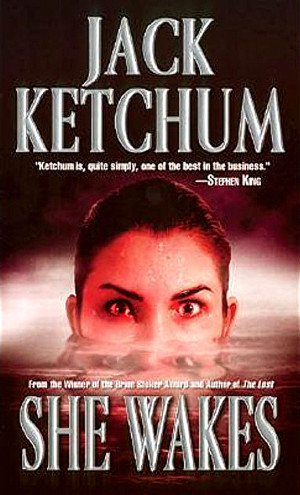
JK: Yes. It's not supernatural, and it's not realistic. It is surreal. I've done that a couple of other times. “The Chain Letter” is a surreal story. MO: Are you superstitious? Do you use any talismans or good luck charms when you write? JK: I'm not superstitious. Not at all. MO: A lot of writers tend to be. JK: Nah, not at all. I mean, I walk under ladders, I don't give a shit. I guess I'm sort of spiritual. I can find a lot of spirits in the woods and in strange places, lonely places. But that's not the same thing. One of my favorite books this year was The End of Faith by Sam Harris. Which posits that the world won't be a safe or reasonable place to live in until all of our modern gods go the way of Thor and Loki and Zeus and the rest. I've believed that since I think I was about eighteen years old. So I don't have a whole lot of superstitious baggage to carry with me. The only reason I wrote She Wakes, which is the only supernatural book that I've ever written, was because I felt a lot of spirituality in Greece. Which had nothing to do with religion either. I used religious images. I used Apollo, Hecate, etc. but that’s just because I wanted to talk about renewal in Greece.MO: These unusual spiritual encounters that you've had, such as in Greece . . . there's no better way to ask this. Were you under the influence of anything? (laughs) JK: Uhh, Greece. (laughs) MO: I have a cousin who swore he saw the devil on a rooftop. He and his friends saw this demonic thing that they swear to this day was the devil. But they were all raging alcoholics . . .
JK: Monica, I took a lot of LSD and mescaline when I was a kid. I never saw God or the devil, but I did see some things in Greece, and not under the influence of anything, that made me feel the world is bigger than I think it is. And I don’t mind that at all. I do mind when people translate that into some sort of faith. It doesn't take faith to look at a pine tree that's a hundred and fifty years old and want to worship it. And want to just touch it. MO: So you're spiritual but not religious. JK: Not religious, but spiritual, yes. MO: What other genres would you like to work in? Have you written outside the horror genre? JK: Well yeah, I’ve written poetry. I started out writing poetry to impress girls. So yes of course I have. I’ve written about rock and roll, written about the sex scene in New York way back when I was a young man, I love doing a nonfiction piece every now and then because that’s a total holiday. I can write an appreciation of Peter Straub or something like that and think “Wow! I’m having a ball now.” And say “Thanks, Peter, or thanks Stephen King.” I’ve written some memoir: “Dust of the Heavens,” “Henry Miller and the Push.” I just write.
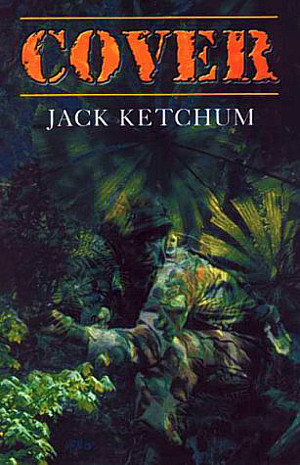
JK: No, not at all. I think COVER is one of my underappreciated novels because it didn't get marketed very well. But Cover has no claim to be horror at all. In fact, it was my first book to have "novel" on the spine. MO: Instead of “horror” or “thriller”? JK: Exactly, just "novel." And that's what it is. It's got horrific elements to it. And almost all my stuff has horrific elements to it. MO: There's a lot of mainstream stuff out there that is not classified as horror that could be. It's just marketed well. JK: Yes, could be. I've always maintained that Moby Dick is a horror novel. If you want to put it that way. But it's so much more than that. And so, I don’t think of my books as necessarily horror. I don’t mind being called a horror novelist whatsoever. Hell, it got me in the door. I’m not about to kick old friends in the ass. MO: But how many times have I told you I felt your writing transcends the genre? JK: It doesn't transcend the genre—there is no genre! It's like Doug Winter said, “Horror is an emotion.” MO: Tell that to the marketing people. JK: Fuck the marketing people. MO: But this is where you want to make your money and want to make your name. JK: I don't need them any more. Thank god. MO: No? Don't you want them?

E.C. McMullen Jr. is a participant in the Amazon Services LLC Associates Program, an affiliate advertising program designed to provide a means for sites to earn advertising fees by advertising and linking to amazon.com.
|
|
|||||||||||||||||||||||||||||||||||||||||||||||||||||



 MO
MO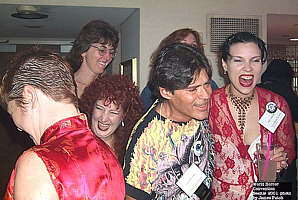


 Feo Amante's Horror Home Page, Feo Amante's Horror Thriller, and feoamante.com are owned and Feo Amante's Horror Home Page, Feo Amante's Horror Thriller, and feoamante.com are owned and Copyright 1997 - 2018 by E.C.McMullen Jr. FAIR USE - PRIVACY POLICY - OWNERSHIP - CONTACT All images and text belong to E.C.McMullen Jr. unless otherwise noted. All fiction stories belong to their individual authors. |