 |
 |
Review by Mike Bracken |
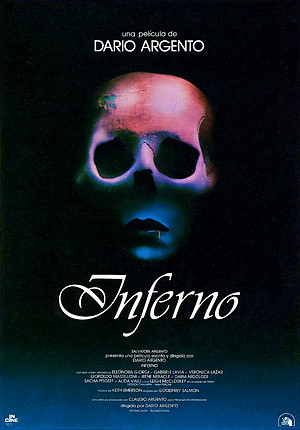 INFERNO - 1980 INFERNO - 1980USA Release: April 2, 1980 Produzioni Intersound / 20th Century Fox Rating: Finland: BANNED / Sweden: 15 / UK: 18 / USA: R |
||
Widely regarded as both Dario Argento's (PHENOMENA, TENEBRE, SUSPIRIA) most confounding and visually stunning film, INFERNO also has the distinction of being his most ambitious project to date.
Made on the heels of SUSPIRIA, and during Argento's most prolific period, INFERNO is the only sequel the director has ever done. And while it's not a true sequel (in the sense that none of the characters from the original film return, not even the antagonist) it does carry forward the ideas that first appeared in SUSPIRIA, particularly the ones spawned from Thomas De Quincey's essay Levana and our Lady of Sorrows (see my SUSPIRIA review for a more detailed commentary on De Quincey's essay).
INFERNO's plot is a disjointed one, dealing with an apartment building in New York City. Poetess/resident Rose (Irene Miracle: WATCHERS 2) purchases a book, entitled The Three Mothers, written by an alchemist named E. Varelli. The book tells of three mothers, Mater Suspiriorum (the mother of sighs), Mater Lachrymarum (the mother of tears), and Mater Tenebrarum (the mother of darkness). It appears that Varelli built each of the mothers a home, one in Freiburg Germany, one in Rome, and one in the heart of New York City. From these homes, the mothers rule the world "with tears, sighs, and darkness". The book also offers clues about how to find "keys" to unlock the secrets of the mother in charge of each house. Rose (and later her brother Mark, played by Leigh McCloskey: THE BERMUDA DEPTHS, CAMERON'S CLOSET, LUCKY STIFF, TERROR IN THE SHADOWS) begins to unravel the mystery of the building, and all hell breaks loose in the process.
Perhaps the film's greatest flaw is that Argento's plot never lives up the film's central premise - that Mater Tenebrarum controls this part of the world. Everything takes place in the insular world of the apartment building or right nearby. All of the film's victims are non-entities whose life or death affects nothing. That someone like Mater Tenebrarum would even concern herself with these people seems implausible when we've been led to believe that she's one of three witches who control the world. In essence, the plot has too narrow a scope to live up to the grandeur inherent in Argento's idea.
Plot problems aside, INFERNO succeeds because it's such a beautifully shot film. Argento pulls out all the stops here, creating one of the most visually arresting genre films ever made. Everything is designed to hit the viewer with maximum effect - be it the lush and lurid use of color (reminiscent of SUSPIRIA), the subtle, but intriguing scene transitions, the wild murder sequences, or Keith Emerson's rock-opera score - there's an over-the-top grandness to INFERNO that makes it incredibly appealing. Subsequent viewings only reinforce that feeling, as Argento nearly overwhelms the viewer's senses the first time through.
The film's performances are all good, especially those of Daria Nicolodi (DEEP RED, PHENOMENA, TENEBRE) as Elise, one of the building's tenants. Also noteworthy are Feodor Chaliapin Jr. (THE CHURCH) and Veronica Lazar (TENEBRE) as alchemist Varelli and Mater Tenebrarum, respectively. Also, keep an eye open for Ania Pieroni (TENEBRE) who appears in several sequences as Mater Lachrymarum.
Keith Emerson handles the scoring duties, taking over for perennial Argento favorites Goblin. The soundtrack is a solid one, sounding almost operatic in spots. The piece played during the film's climax, with its gothically sung chorus, seems a bit hokey, but it really fits in with the mood of both the scene and the film overall. At any rate, it's far better than the heavy metal soundtracks that would come to dominate later Argento films.
The direction of the film is fantastic. Building on what he'd begun with SUSPIRIA, Argento makes INFERNO stand out as an artistic horror film. Lurid colors and strange lighting register in every shot, giving the proceedings a nightmarish feel. The film is set in New York, but instead of offering us drab, bleak cityscapes as countless other directors have, Argento gives us a city alight with vibrant reds, green, and blues - making it a New York that we're only vaguely familiar with (Argento would later use some of the same techniques when portraying Rome in TENEBRE). Art director Giussepe Bassan (SUSPIRIA) has done a splendid job creating the highly stylized apartment building, as well as its hidden lairs discovered in the film's climax.
Italian FX legend Germano Natali (TERROR AT THE OPERA, THE BEYOND, SUSPIRIA) once again handles the film's special effects. The murder sequences are all nicely done, particularly one savage stabbing near the middle of the film. Equally impressive is a segment where one character is attacked and killed by a horde of murderous cats.
The only FX flaw is a really lame looking Grim Reaper that appears late in the film. Those scenes aside, the film's most impressive sequence was created by the late, great, Mario Bava (BLOOD AND BLACK LACE, TWITCH OF THE DEATH NERVE, BLACK SUNDAY [1960]).
Early in the film, Rose wanders into the building's basement, where she finds a hole in the floor leading to another room underneath the building, this one filled entirely with water. When Rose accidentally drops her keys into the hole, she's forced to dive into this submerged room, finding a picture of Mater Tenebrarum as well as some other things she didn't expect to discover. This sequence would be Bava's last film contribution, as he would die shortly after. Unfortunately, Bava wasn't mentioned in the film's credits.
Despite its shortcomings, INFERNO is a fine film. It's an ambitious project that doesn't always hit on all cylinders, yet its arty aspirations more than make up for its flaws. While the plot seems to be little more than a series of events required to connect the endless array of elaborate set pieces that Argento has conceived, there's still a discernible plotline and a genuine sense of atmosphere throughout. And while it falls just short of the masterwork status bestowed upon SUSPIRIA, TENEBRE, and DEEP RED, it's still a fine example of the horror film as art. For that, it earns every one of its Four Shriek Girls.
Now let's just hope that Argento gets to make the third film in this cycle, this one dealing with Mater Lachrymarum.
4 Shriek Girls

This review copyright 1999 E.C.McMullen Jr.

|
| DRESS NICE | |


| YOU MIGHT ALSO ENJOY (Sub-Section: PSYCHO KILLERS) |
||
 |
 |
 |
| ALL THE COLORS OF THE DARK MOVIE REVIEW |
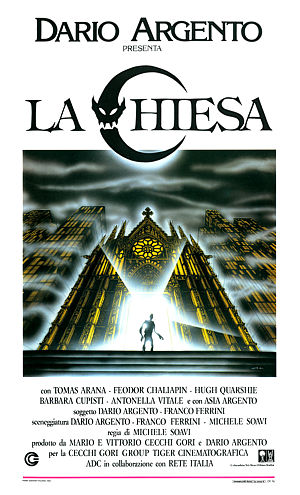
THE CHURCH MOVIE REVIEW |
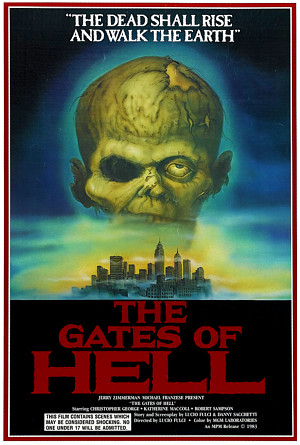
THE GATES OF HELL MOVIE REVIEW |
FEO AMANTE'S HORROR THRILLERCreated by:E.C.McMullen Jr. FOLLOW ME @ |
| Amazon |
| ECMJr |
| Feo Blog |
| IMDb |
| Stage32 |
| YouTube |
| Zazzle Shop |